Golfer’s Elbow Treatment
Golfer’s elbow (also known as medial epicondylitis) causes pain on the inside of the elbow, often where the forearm muscles attach to the bone. It is commonly linked to gripping, lifting, typing, or repetitive hand and wrist movements – not just golf.
People often notice discomfort when pouring a kettle, typing for long periods, using tools, carrying shopping, or gripping during sports or gym exercises.
At Bucks Osteopathy & Physio, our physiotherapists and osteopaths support patients with golfer’s elbow across our clinics in Amersham, Beaconsfield, and Gerrards Cross. Treatment focuses on easing irritation, improving function, and rebuilding comfortable strength at a manageable pace.
What Causes Golfer’s Elbow?
Golfer’s elbow usually develops due to overload or strain on the forearm muscles and tendons. This can happen gradually or after a period of increased activity.
Common causes include:
- Repetitive gripping or lifting
- Desk and computer work
- DIY or manual work
- Racquet sports or weight training
- Carrying heavy bags
- Gradual tendon irritation from everyday tasks
It affects many people who have never played golf at all.
Common Symptoms
You may notice:
- Pain or tenderness on the inside of the elbow
- Pain when gripping or lifting objects
- Discomfort when carrying bags or weights
- A dull ache spreading down the inside of the forearm
- Difficulty performing twisting movements (e.g., opening jars)
- Reduced grip strength
Symptoms may vary depending on activity and load.
How We Help at Bucks Osteopathy & Physio
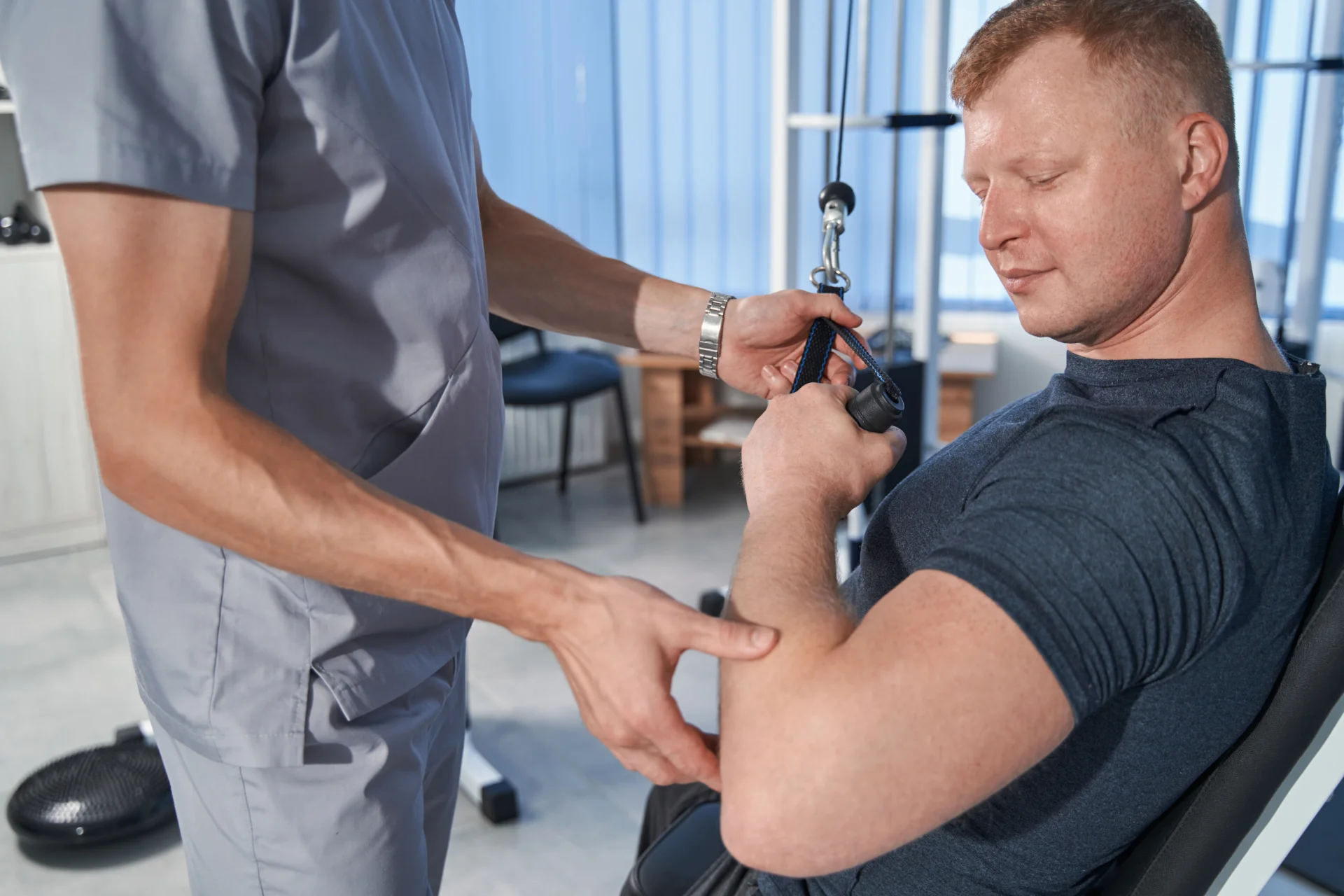
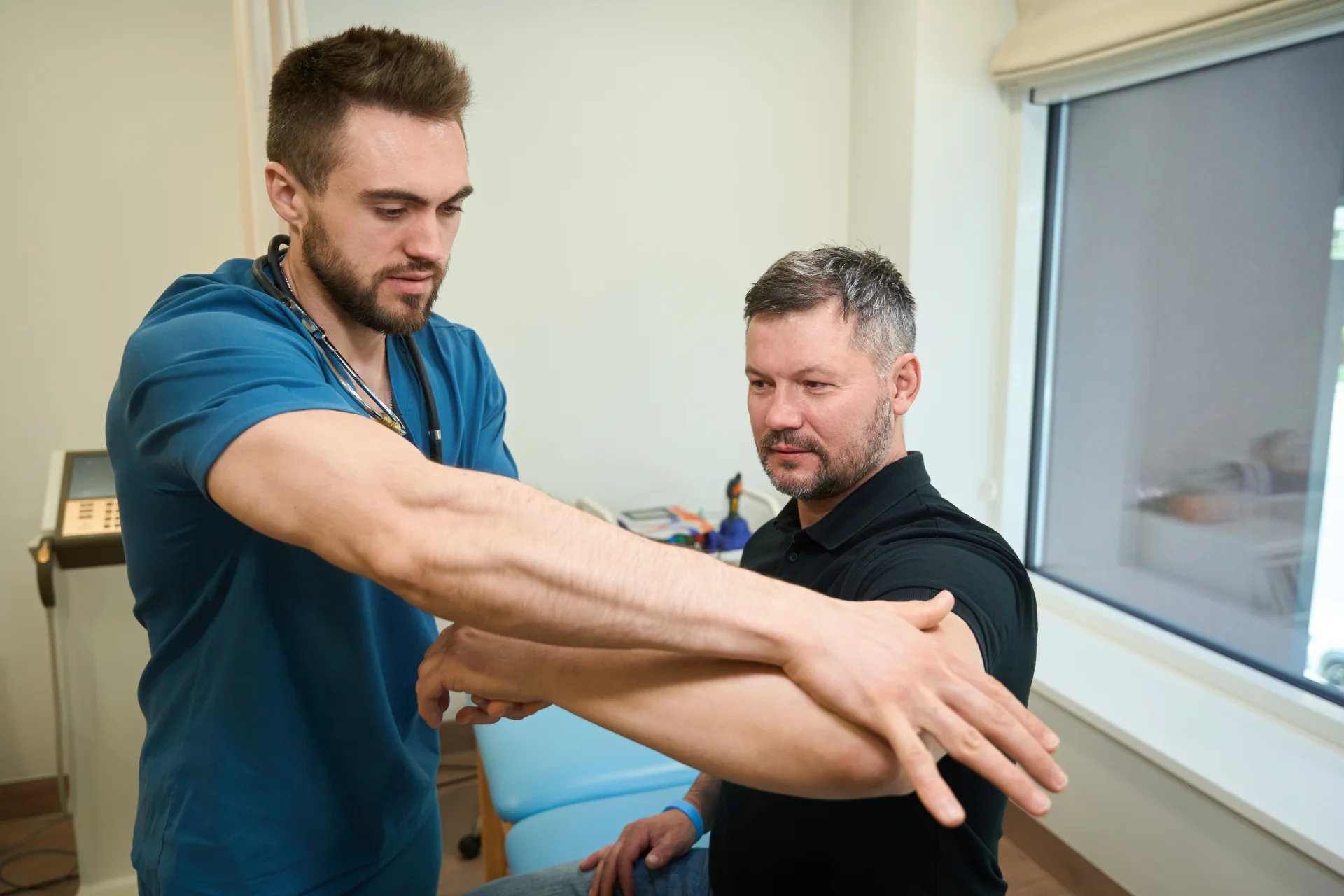
Your practitioner will assess your elbow, wrist, shoulder, grip strength, activity habits, and work demands to understand what’s contributing to your symptoms. Treatment is tailored to your daily routine and recovery goals.
Treatment may include:
- Gentle hands-on treatment to ease muscle tension
- Joint mobilisation where appropriate
- Targeted forearm and grip strengthening
- Tendon loading exercises, progressed gradually
- Guidance on work, sport, and daily activities
- Strategies to reduce flare-ups and support long-term recovery
We progress exercises at a pace that avoids over-irritation – building strength steadily for lasting improvement.
What to Expect During Your Appointment
During your first session, we will:
- Listen to your symptoms and how they affect daily life
- Assess elbow movement, strength, grip, and forearm function
- Explain what is contributing to your pain in clear, simple terms
- Treat using hands-on techniques where suitable
- Provide a personalised home exercise plan that is realistic and manageable
Our aim is to give you clarity and confidence, not just exercises.
Why Choose Bucks Osteopathy & Physio?
- Experienced Clinicians Our physiotherapists and osteopaths treat golfer’s elbow regularly and understand how it affects work and everyday tasks.
- Evidence-Based, Personalised Care No generic exercise sheets - your plan is tailored to your needs and reviewed as you progress.
- Local Clinics, Easy Booking Appointments in Amersham, Beaconsfield, and Gerrards Cross, with simple online booking and flexible appointment times.
Golfer’s Elbow Treatment FAQs
Do I need a scan for golfer’s elbow?
Not usually. Most cases can be diagnosed through assessment. Imaging is only recommended when necessary.
Should I stop using my arm?
Total rest can reduce strength and slow recovery. We guide you on how to stay active safely.
Are exercises important?
Yes – strengthening the tendon gradually is key. We’ll show you how to do this comfortably and effectively.
How long does recovery take?
Recovery varies depending on severity and activity levels. We’ll outline expected timeframes and support you along the way.